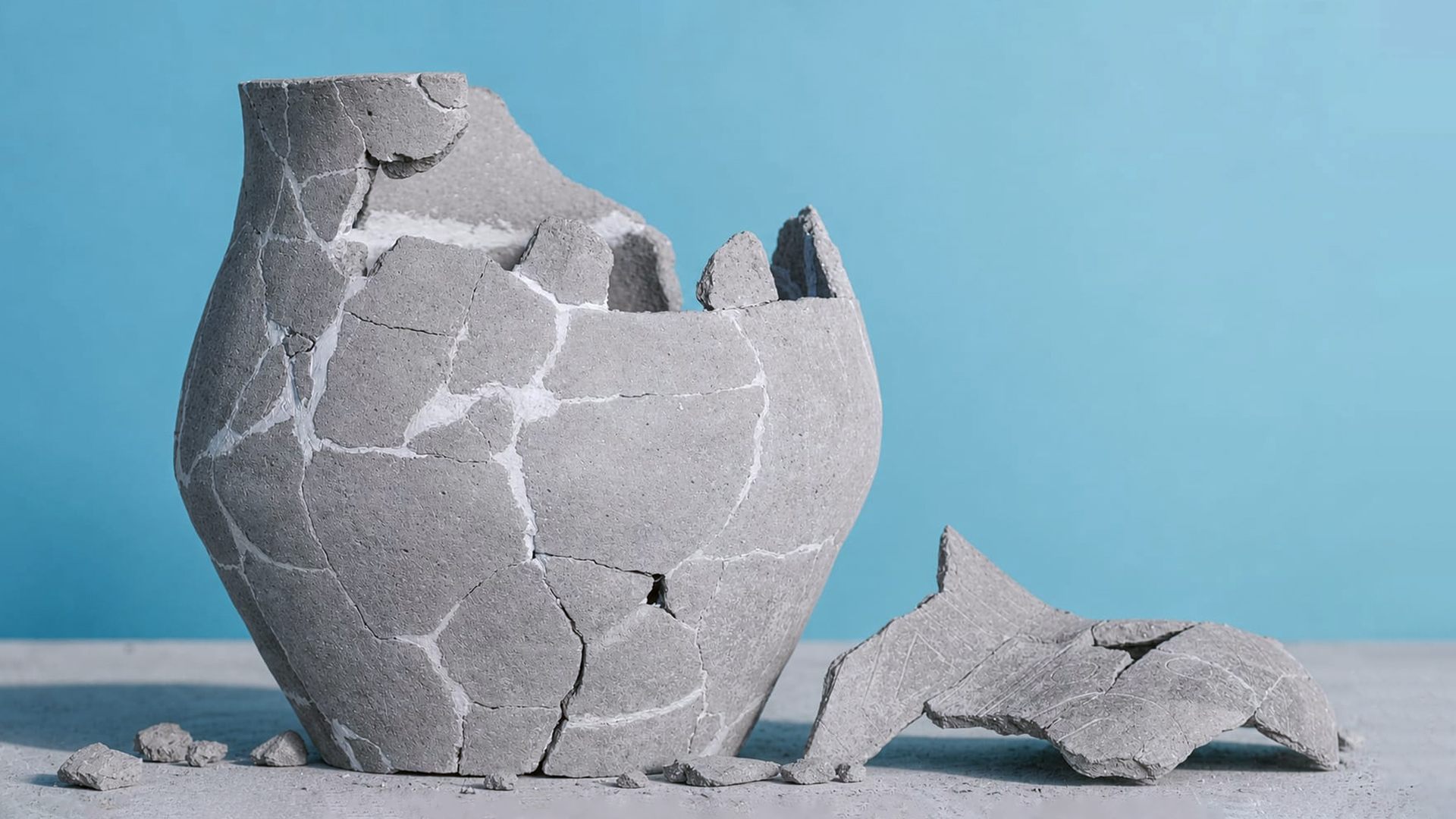
Last week, researchers at Stanford released DeLM, a framework designed to help agents learn from each other’s successes and failures. Instead of approaching every task from scratch, agents share verified findings and documented dead ends through a common memory layer.
The result was striking: multi-agent tasks were completed at roughly half the cost.
Most coverage of the research has focused on agent coordination. Understandable. But the more interesting takeaway may be much simpler.
The savings didn’t come from making agents smarter. They came from making agents remember.
That’s a lesson that extends well beyond research environments and into the reality of running AI systems in production.
Most AI work is re-investigating, not building
Most AI teams don’t spend their days building new workflows. They spend a surprising amount of time understanding existing ones: investigating failures, reproducing edge cases, and figuring out why an agent behaved differently in production than it did in testing.
Anyone who has been responsible for a production AI system has experienced some version of this cycle.
An incident appears. An engineer spends hours tracing through prompts, retrieval results, tool calls, and model outputs. Eventually the root cause is identified, a fix is deployed, and everyone moves on.
Then, weeks later, another incident appears. The context is different. The user is different. The workflow has shifted just enough that it doesn’t look like the same problem at first glance.
But once you’ve seen enough of these, you start to recognize the pattern — and the frustrating part is that the team has usually solved something like it before.
The issue isn’t that the learning didn’t happen. It’s that it didn’t persist in a way the system could actually use. So the investigation starts again.
The savings came from memory, not smarter agents
This is where the Stanford result becomes interesting. The framework didn’t reduce costs by improving reasoning. It reduced costs by reducing repeated work. When one agent discovered a dead end, the next agent didn’t have to waste time rediscovering it. When useful information was found once, it became available for future decisions.
The same dynamic exists inside engineering organizations. Every incident generates valuable information: a failure mode gets uncovered, a blind spot in the system becomes visible, a fix reveals something about how the system behaves under pressure.
And in practice, that shows up in a very simple way — the same problems keep coming back. Not because people didn’t do the work the first time, but because the work didn’t carry forward in a usable form. It gets buried in tickets, scattered across postmortems, or held in the memory of whoever happened to be on call that day.
Why the same failures keep coming back
As systems grow more complex, that gap starts to matter more. Failures are rarely isolated. A retrieval issue can surface as a planning failure. A tool error can look like a model issue. A small change in one layer can ripple through the rest of the system in ways that are hard to reconstruct after the fact.
By the time you’re investigating, you’re often reconstructing a chain of events that has already disappeared.
The real gain wasn’t the agents collaborating better. It’s that they stopped paying the cost of rediscovery.
That’s the part Stanford’s work makes hard to ignore. Once something was learned, it stayed learned. Once a failure was understood, it informed the next decision instead of being lost to history.
Observability tells you what happened — not what you learned
That’s also where most production AI systems still feel incomplete. They’re good at telling you what happened. Logs, metrics, traces, and dashboards can usually reconstruct the path an agent took. But that information tends to be episodic — it explains a single moment in time rather than building anything durable from it.
And once an incident is closed, that context rarely shows up again in a meaningful way.
The more useful question isn’t just what happened in this case. It’s whether that learning will show up the next time something similar happens.
Because the cost doesn’t come from solving a problem once. It comes from solving it repeatedly without realizing it’s already been solved before.
Stanford’s result is a reminder that this isn’t just an operational detail. It’s where a surprising amount of time disappears in real systems.
And the teams that start to pull ahead won’t just be the ones that can debug faster in the moment. They’ll be the ones that don’t have to debug the same thing twice.
Frequently asked questions
Prove AI is building solutions to power more correct, explainable and auditable AI outcomes.
We’re always interested in learning about AI management challenges.
Get in Touch